More and more musicians and sound professionals are asking for performance‑oriented microphones without the premium price tag. While models like the DPA 4099 CORE+ Instrument Microphone have long been a benchmark for pro audio, not every venue, rental house, or independent artist can—or needs to—invest at that level. This shift has created a real demand for alternatives that bring pro‑grade sound closer to everyday budgets.
In this article we look at what makes a microphone “professional grade,” why cost matters in real‑world use, and how well‑engineered alternatives can meet performance needs while supporting healthy channel margins.
What Defines “Professional‑Grade” Sound?
When engineers think of professional microphones, there are a few core attributes they care about:
1) Transparent, natural sound
Pro‑grade instrument mics aim to reproduce the source with fidelity and clarity, without coloration that distorts the instrument’s character. This is a key reason models like the DPA 4099 are widely used in both live and studio settings. (DPA Microphones)
2) Strong off‑axis rejection
Off‑axis rejection refers to how well a microphone suppresses sounds coming from directions other than the intended source. Good off‑axis rejection helps isolate the instrument in loud or noisy environments—a crucial factor for clean recordings and controlled live mixes. (AudioPhilly)
3) Adaptability and mounting flexibility
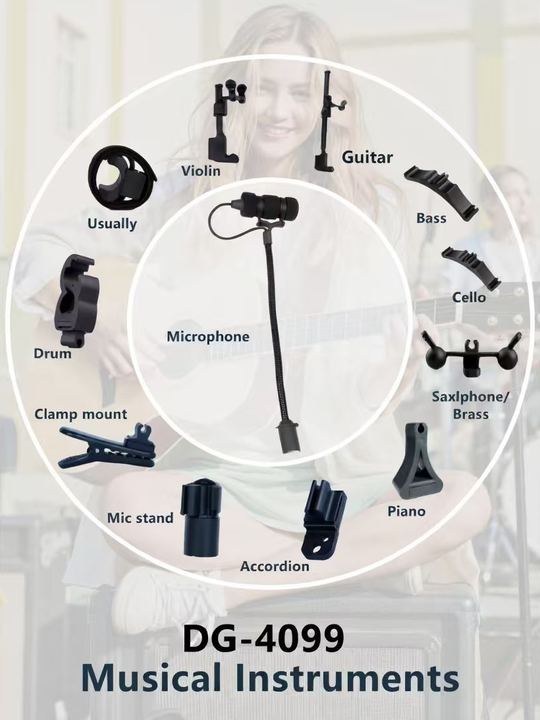
Professional instrument mics often include a range of clips and mounting options so they can be placed precisely on different instruments without interfering with playability. The DPA 4099 line, for example, is known for its flexibility and clip options. (DPA Cloud14)
These qualities make high‑end models reliable references—but they also contribute to higher retail prices.
Why Budget‑Friendly Pro‑Level Options Matter
Real market needs
There is a large segment of the pro audio market that values sound quality close to professional standards, but cannot justify premium pricing—for example:
Small and medium‑sized rental companies
School music programs and community venues
Touring artists on tighter budgets
Recording studios needing multiples of a mic type
For these buyers, an option that delivers clear, natural performance with solid off‑axis rejection and versatile mounting can be far more practical, especially when the price is a fraction of the high‑end alternative.
What Musicians and Sound Engineers Really Care About
Instead of absolute comparisons, it helps to think in terms of use‑case results:
Is the microphone clear and consistent across multiple instruments?
Does it hold up in live amplification without feedback or bleed?
Can it mount securely on many instruments with minimal fuss?
Does it keep channel margin healthy for distributors and dealers?
These are the questions real buyers ask—not just “what’s on the spec sheet.”
Positioning Your Catalog For Channels
When presenting alternatives to flagship references like the DPA 4099, keep these messaging principles in mind:
✔ Emphasize Applicable Strengths
Lead with benefits that matter in real settings—clear sound, low noise rejection, multi‑instrument versatility.
✔ Avoid Absolute “Best/Wins” Comparisons
Rather than claiming equivalence to high‑end products, frame the alternative as a practical professional gradient that meets real cost‑performance demands.
✔ Highlight Value in Practical Scenarios
For example:
Performance rentals
Schools and houses of worship
Mid‑tier touring artists
Multi‑mic bundles for studios
This approach reduces unrealistic expectations and leads to more successful deployments.
Conclusion
Professional‑grade microphones have long led with premium performance—however, sound and usability need not be locked behind a high price point to satisfy real‑world use cases.
If you want a ready‑to‑use product catalog with positioning and recommended price bands that helps your channel partners place these options alongside high‑end references effectively,
👉 Reply: CATALOG to request your free product catalog + price‑band positioning table.
Email: [email protected]
📌 FAQ
1) What makes a microphone “professional grade”?
Professional‑grade often means clear, natural sound capture with minimal coloration and strong off‑axis rejection in live and studio contexts. Models like the DPA 4099 CORE+ are known for these traits. (DPA Microphones)
2) Why is off‑axis rejection important?
Off‑axis rejection helps isolate the desired source by reducing unwanted background reflections and ambient noise, which is essential on stage or in crowded recording environments. (AudioPhilly)
3) Can budget‑friendly alternatives really satisfy pro users?
Yes—if they deliver consistent sound quality, reliable rejection, and versatile mounting, alternatives can satisfy many professional workflows, especially where extreme top‑end fidelity isn’t a must.
4) What are common use cases for affordable pro‑grade mics?
Typical scenarios include rental houses, education facilities, churches, rehearsals, and mid‑level touring where budgets and quantities matter.
5) How should distributors position these alternatives?
Position them as practical professional options with strong performance‑to‑cost value, not as direct one‑to‑one replacements. Also provide clear MSRP bands that protect channel margins.